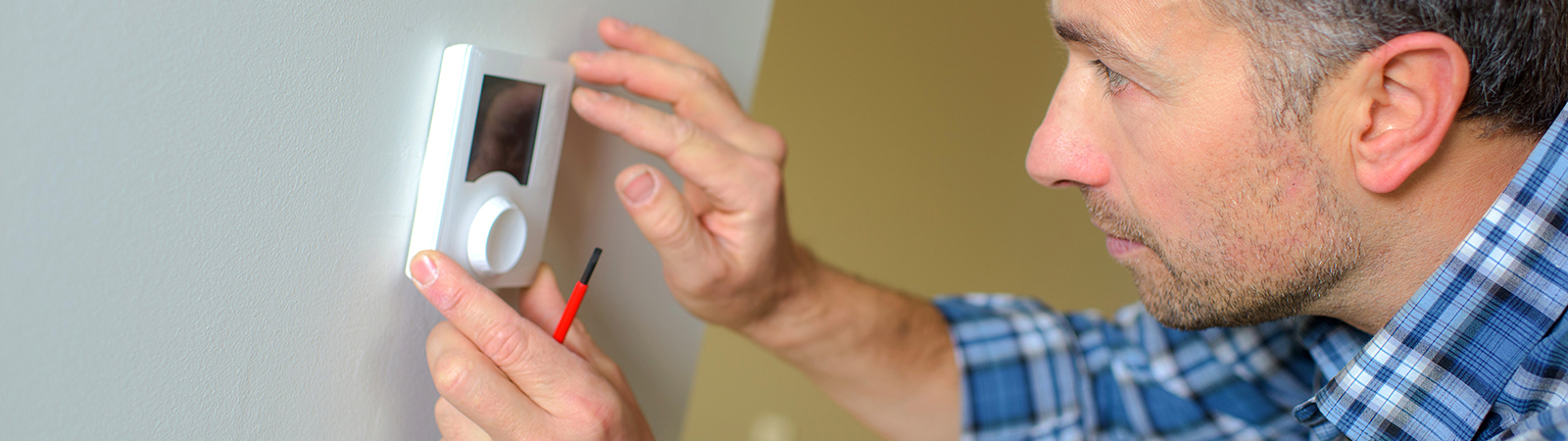
Gaps, holes and air leaks—which can all be prevented—can make energy bills unnecessarily high and let valuable resources go to waste. In fact, as much as 40% of a building’s energy is lost due to air infiltration.1 Spray foam can help weatherize your home, acting as both insulation and an air sealant, or air barrier, closing those nooks and crannies.
The U.S. Environmental Protection Agency’s (EPA) Energy Star program estimates that by adding insulation and sealing air leaks, you could save up to 20% on your monthly energy bills2. The U.S. Department of Energy estimates that 56% of the energy used in a home goes to heating and cooling.2 Your home’s heating, ventilating, and air conditioning (HVAC) system has a big effect on your utility bills and energy consumption. Maintaining an optimal HVAC system can make your home more energy efficient. Spray foam insulation can help reduce the workload on your HVAC system thanks to its ability to help prevent heat from flowing in and out of your house.3 In fact, with spray foam, HVAC sizing can be reduced as much as 35% without the loss of efficiency and comfort.4 Click here to find out how spray foam reduces greenhouse gas emissions.

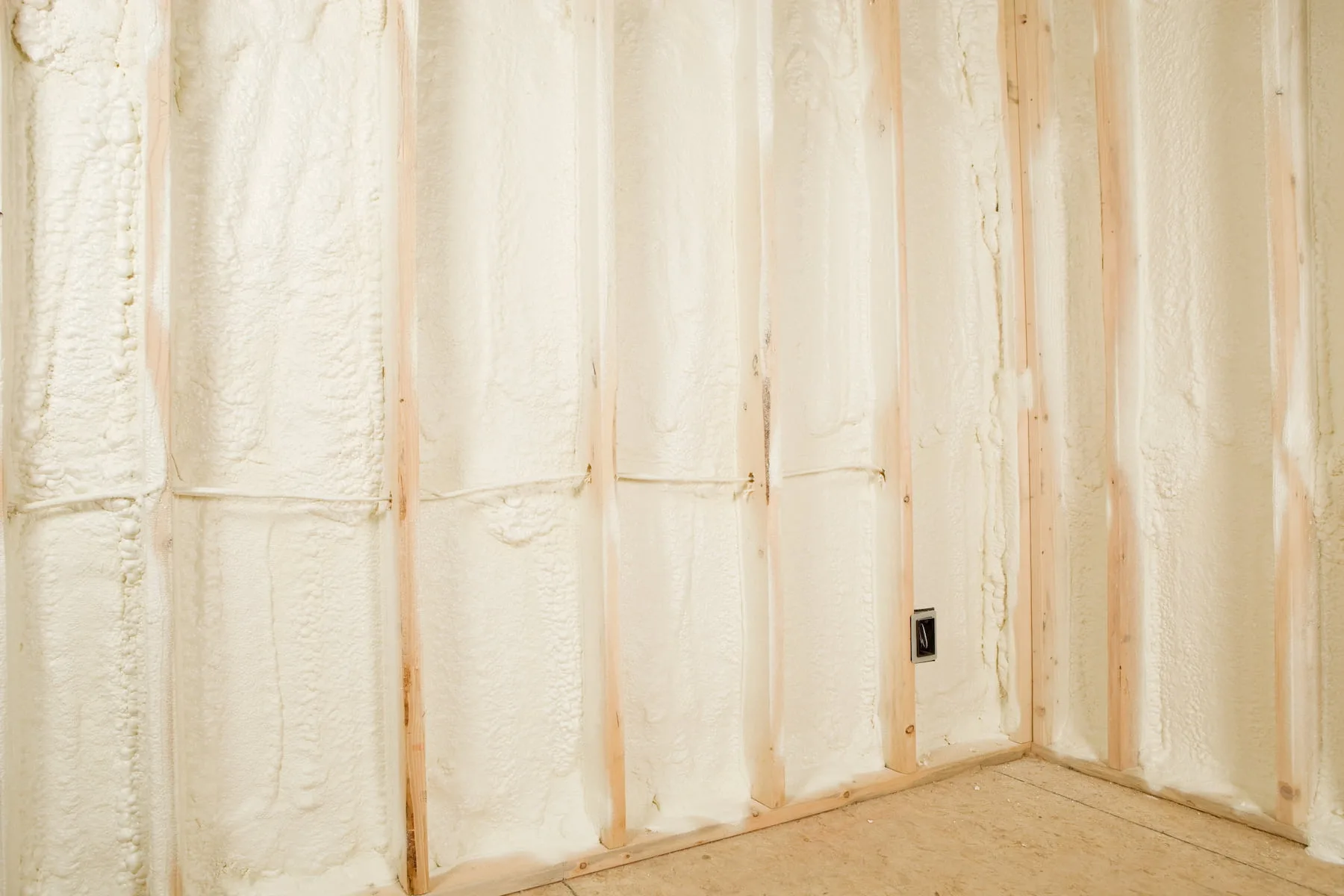
Spray Foam Insulates and Air Seals
Air leaks can waste energy and increase utility bills. Spray foam can weatherize your home by filling gaps and stopping the leaks in many areas. Some common spots for air leaks that can be sealed with spray foam include:
- Behind knee walls
- Attic hatches
- Wiring holes
- Plumbing vents
- Open soffits – the area that connects house exterior walls to roofs
- Recessed light, furnace flue or duct chaseways
- Basement rim joists, windows and doors5

Spray Foam Roofing
“Cool roofs” are roofs designed to maintain a lower temperature than traditional roofs. They are light in color and reflect sunlight instead of absorbing it, which allows heat to escape. Spray foam applied to the roof of a home or building can provide cool roof performance when topped with a protective, reflective coating. Along with reducing air conditioning needs, spray foam helps protects the roof, potentially extending its lifetime.6
Spray foam roofs also reduce thermal shorts or bridges. Traditional roofing materials must be nailed down or fastened to the roof deck with metal fastenings, creating a thermal short or bridge from the conditioned building interior to the outside roof deck, which can reach temperatures of up to 180 degrees in the summer. Spray foam roofing does not require metal fastening since the foam bonds directly to the roof deck in a continuous layer of insulation.

Sealing Gaps and Cracks
Building construction involves transitions between materials and systems, and gaps are provided to allow for movements between materials. One component foam sealant, also known as foam sealant or foam-in-a-can, can help seal gaps and cracks around windows, doors, and other penetrations.
One component foam sealant bonds readily to wood, masonry, metal, glass and many plastics. This sealant sets and cures quickly, hardening into a protective shield that helps prevent air from crossing the foam barrier.
Typical applications for single component foam sealant include:
- Filling gaps and cracks around window and doorframes
- Closing gaps around outside-wall penetrations made by gas lines, water pipes, or dryer-vent hoses
- Filling gaps inside the home caused by electrical line or HVAC vent penetrations
Net Zero Homes
Net Zero/High Performance Houses
High performance houses are increasingly being selected by home buyers. Choices include:
- Energy Star Houses—feature higher insulation, airtightness, high performance windows and mechanical systems above that which is required by Code.
- Net Zero Ready Houses–feature even higher insulation, airtightness, high performance windows and mechanical systems above Energy Star such that the home is ready for added solar arrays and other Net Zero features at some point in the future.
- Net Zero Houses—all of the above complete with added solar arrays and other features to offset the energy consumed by the house.
Benefits of High Performance Houses
High performance houses have:
- Lower operating costs because they consume less energy.
- Reduced Carbon Emissions because they are less reliant on fossil fuels.
- Improved Comfort because they are better insulated, have fewer drafts and are more airtight.
- Improved Air Quality because they incorporate mechanical ventilation systems into their design.
- Energy Independence because they are less reliant on energy supplies from off-site
And if you build a high performance home you may qualify for up to $4,500 in Federal Government Tax Credits! Ask your builder for details on the 45L tax credits.
Why does Spray Foam Make Sense in a High Performance Energy Star or Net Zero Energy Home?
- Spray Foam can be applied continuously in attics, crawlspaces, basements and on the exterior of the home to provide a continuous “blanket” of air impermeable insulation.
- Spray Foam requires no nails or fasteners to hold it in place so its application truly is continuous when compared with other products
- There is less need for tapes and sealants at fasteners and joints the way there is with insulation board products.
- Using a continuous layer of air impermeable spray foam allows you to obtain high levels of thermal performance and airtightness in one easy step.
Footnotes
- https://www.energystar.gov/ia/home_improvement/home_sealing/AirSealingFS_2005.pdf
- http://www.energystar.gov/index.cfm?c=home_sealing.hm_improvement_methodology
- http://energy.gov/heating-and-cooling
- Savings vary. Find out why in the seller’s fact sheet on R-values. Higher R-values mean greater insulating power. See 16 CFR 460.19.
- Canadian Urethane Foam Contractors Association
- https://www.energystar.gov/saveathome/heating-cooling?s=mega
- https://energy.gov/energysaver/cool-roofs